Mount Tzuhalem Overview: Physical and Biological

Original Purpose: To preserve outstanding Garry oak-wildflower communities Physical:Mount Tzuhalem consists of strongly bedded conglomerates and sandstones. The reserve, at middle elevations on the western side of the mountain, faces southwest and has strongly sloping, internally hilly terrain. Soils, where developed, are shallow Sombric and Dystric Brunisols. Hollows between rock outcrops may contain seepage water

Field’s Lease Overview: Physical and Biological

Original Purpose: To protect a small example of the antelope brush community, the most arid shrub-steppe ecosystem in Canada Physical: Rocky knolls thinly covered with sandy soil form the central axis of this reserve. These are bordered by sandy flats on their west and south sides, and a steep northeast-facing slope along the northeast boundary.

Chicken’s Neck Mountain ER 57 Overview, Physical and Biological

Original Purpose: To preserve an excellent stand of mature spruce-subalpine fir in the Boreal White and Black Spruce Zone. Physical: The reserve is within the Stikine Ranges of north-western British Columbia. These mountains have a core of granitic rocks which intrude folded sedimentary and volcanic rocks. The reserve is on relatively steep north-facing slopes in

Soap Lake Ecological Reserve #3 Overview: Biological and Physical

ORIGINAL PURPOSE To conserve an alkaline lake, its associated flora and fauna, and representative ecosystems of the Interior Douglas-Fir Zone Physical: Soap Lake, about 9 ha in size and located in a shallow valley in the center of the reserve, is very alkaline (pH 9.1) due to high evaporation and limited outflow. A band of

Tranquille Ecological Reserve Overview: Physical and Biological

ORIGINAL PURPOSE Preservation of representative ponderosa pine and Douglas-fir ecosystems in a prominent interior valley Physical: This reserve, located on the north side of the Thompson River valley, has two distinct landforms. Its northeastern half consists of steep, gullied slopes which drop away sharply from the Red Plateau to the north. These have much exposed

Sikanni Chief River ER #46, Biological and Physical : Overview

ORIGINAL PURPOSE To conserve alpine-subalpine ecosystems representative of the northern Rocky Mountains CURRENT PURPOSE To conserve the northern most occurrence of Engelmann spruce in the Rocky Mountains OVERVIEW Physical Featuring spectacular alpine terrain in the heart of the northern Rockies, this triangular reserve encompasses the watersheds of two small streams that flow southwest into Sikanni

Marine Bird Monitoring at Race Rocks Ecological Reserve

Note: At the time this was proposed, complete adherence to the process was not possible, so that intermittent informal monitoring only took place. From the original at: http://www.racerocks.com/racerock/seabirds/nestsurvey/monitor.htm Version 1 March 31, 2000 Prepared for Lester B. Pearson College and the Department of Fisheries and Oceans, with support from the Department of the Environment, Canadian

Big Creek ER #127 Overview- Physical and Biological

Physical: Biological: Most of the reserve consists of steep east to southeast-facing slopes formed by downcutting of Big Creek into the lava plateau. Small areas of more level topography include the Big Creek fan and terraces above the Chilcotin River. Surficial materials are primarily glacial till and fluvial deposits. Soils of grasslands and open woodland

Ambrose lake Overview, Physical and Biological

See the complete report pfd file: ambrose_lake(1) ORIGINAL PURPOSE To preserve a small coastal lake, adjacent bogland, and surrounding forest Physical: The reserve occurs on undulating terrain of the Georgia Lowland, underlain by largely granitic bedrock. Its western boundary follows 1.5 km of marine shoreline along Agamemnon Channel, its eastern boundary a similar distance along

Mount Elliot ER #125 Purpose Statement

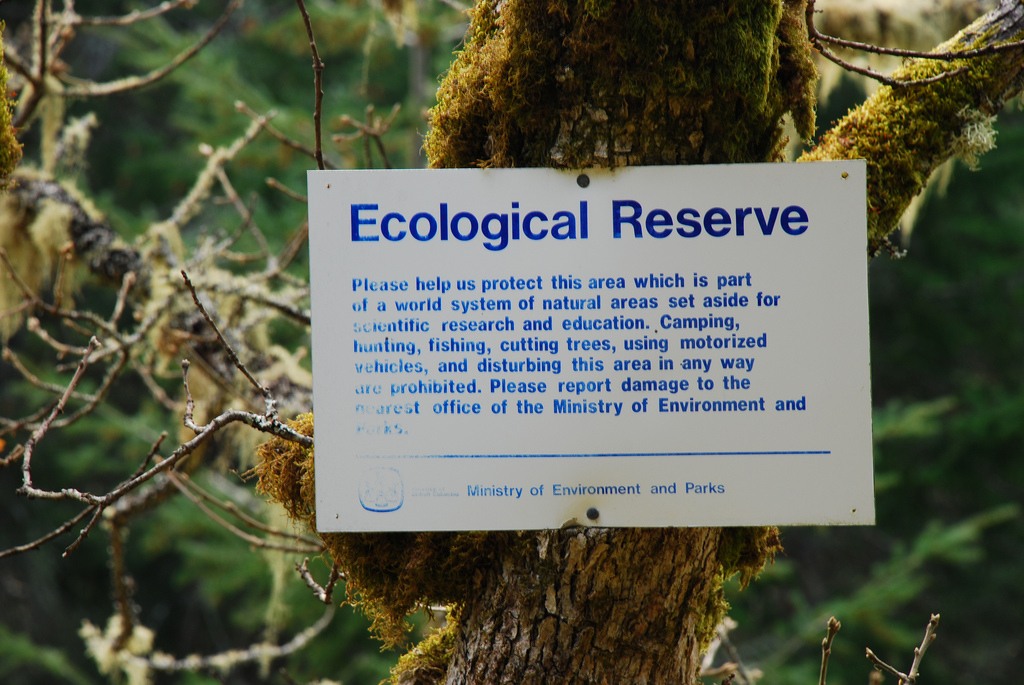
Ecological reserves are areas selected to preserve representative and special natural ecosystems, plant and animal species, features and phenomena. The key goal of ecological reserves is to contribute to the maintenance of biological diversity and the protection of genetic materials. All consumptive resource uses and the use of motorized vehicles are prohibited. Research and educational

Mount Elliott ER #125 Overview, Physical and Biological

ORIGINAL PURPOSE : To protect in its natural state, a small, self-contained subalpine drainage, including a lake Physical: The reserve includes a complete hanging valley with a subalpine lake. The side walls are steep, but mostly forested. Rocks are granite-type crystalline rocks of the Jurassic Island Intrusions formation. Surficial materials are mostly colluvial, or absent.

Raspberry Harbour ER #91 Overview: Biological and Physical

ORIGINAL PURPOSE To preserve outstanding lodgepole pine stands and adjacent bogland near the northern edge of the Sub-Boreal Spruce Zone Physical: The reserve is located on the flat, eastern half of a peninsula between Omineca Arm and Finlay Reach of Williston Lake. This level land on the floor of the Rocky Mountain Trench, underlain by

Claud Elliott Creek Overview: Physical and Biological

ORIGINAL PURPOSE: To protect representative old-growth montane forest communities on northeastern Vancouver Island Physical: The reserve comprises mostly southeast-facing and some south-facing slopes of a low mountain ridge. Bedrocks belong to the Island Intrusions formation and surficial materials are till and colluvium. Soils are mostly Orthic Humo-ferric Podzols. See the complete version of this document

Aleza Lake Overview:

Physical: The reserve lies on a gently Dissected plain of low relief between the Fraser ND THE Bowron rivers. This area was flooded by a glacial lake at the close of the ice age and is underlain by glacial lake clays. The reserve has a very gentle slope to the north, and small streams flowing

Mount Maxwell ER#37 Overview, Biological and Physical

ORIGINAL PURPOSE To protect outstanding Garry oak stands and associated vegetation Physical: The reserve is on the strongly sloping southwest side of Baynes Peak. Surficial materials are colluvium and weathered bedrock derived from sandstone. Soils are thin, poorly developed, and subject to summer drought. Dominant soils are Brunisols, but small areas of Podzols occur. Streams

Skagit River Cottonwoods Overview

PHYSICAL: The reserve is on the floodplain of the Skagit River , a relatively small, fast-flowing river with a gradient of about six m/km. The northeast-southwest trending valley, located in the Hozameen Ranges of the Cascade Mountains, is bounded by slopes of about 30o which rise to peaks of 2100-2500 m. The valley is relatively