Baeria Rocks Overview

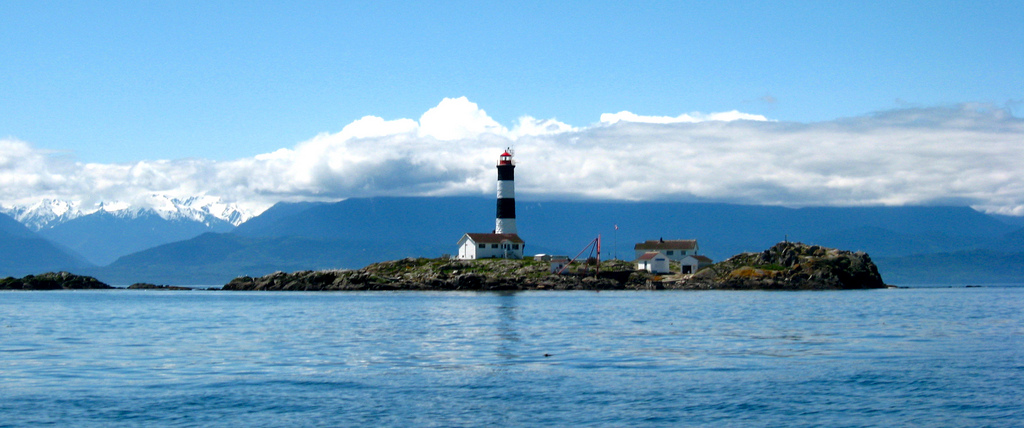
Closed to the public by Order-in-Council no. 1920, 16 June 1977 to protect nesting birds which are very vulnerable to disturbance. A permit is required to land on the rocks and they are accessible by boat. Physical: The terrestrial part of the reserve consists of two low bedrock islands 500 m apart, the southern of

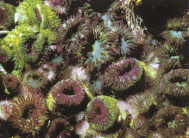
The Ecological Niche of Anthopleura elegantissina at Race Rocks

by: Santiago Salinas Candidate number: 0034 – 119 Subject: Biology Best Language Spanish Student , Lester B. Pearson College of the Pacific Submitted as partial fulfillment for the International Baccalaureate diploma program, January 2000 from the original: http://www.racerocks.com/racerock/research/santiago/santiago.htm   Abstract As with any other species at Race Rocks, Anthopleura elegantissima is an important member of

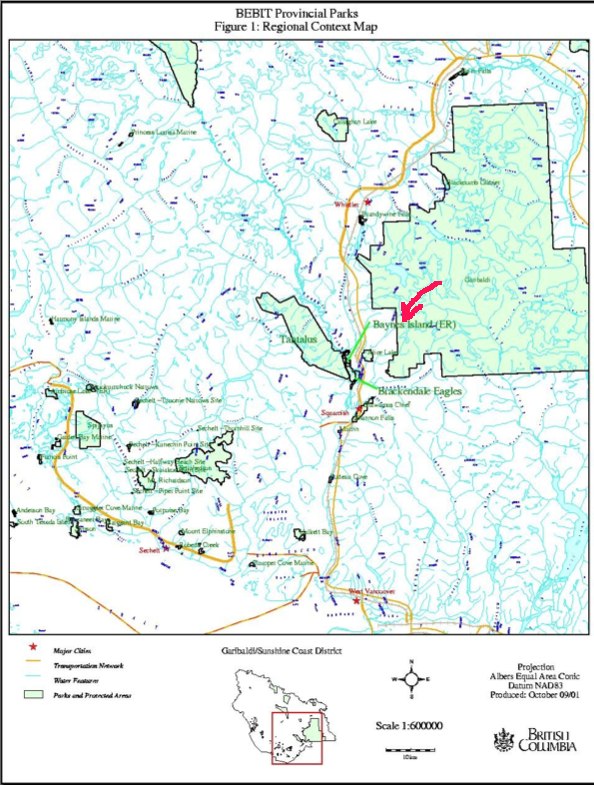
Baynes Island, Biological and Physical Overview

ORIGINAL PURPOSE: To preserve floodplain cottonwood stands for purposes of hybridization and stock improvement Biological: Baynes Island, except for narrow gravel bars at its perimeter, is completely forested. One community of shrubs and four forest communities have been described. Shrub stands, of limited extent, are dominated by the tall shrubs Pacific willow and Pacific ninebark.

RAM CREEK ER #26 Overview: Biological and Physical

RAM CREEK ER #26 ORIGINAL PURPOSE Protection of warmsprings and very restricted plant communities and rare plants against recreational and other damage Se the complete PDF: Ram Creek ER 26 OVERVIEW Date established:29 July 1971 ORC #:3026 Map number:82 J/4 Location:20 km SE of Canal Flats Latitude:50º02’N Longitude:115º36’W Total Area:121 ha Land:121 ha Elevation: 1,370-1,615 m

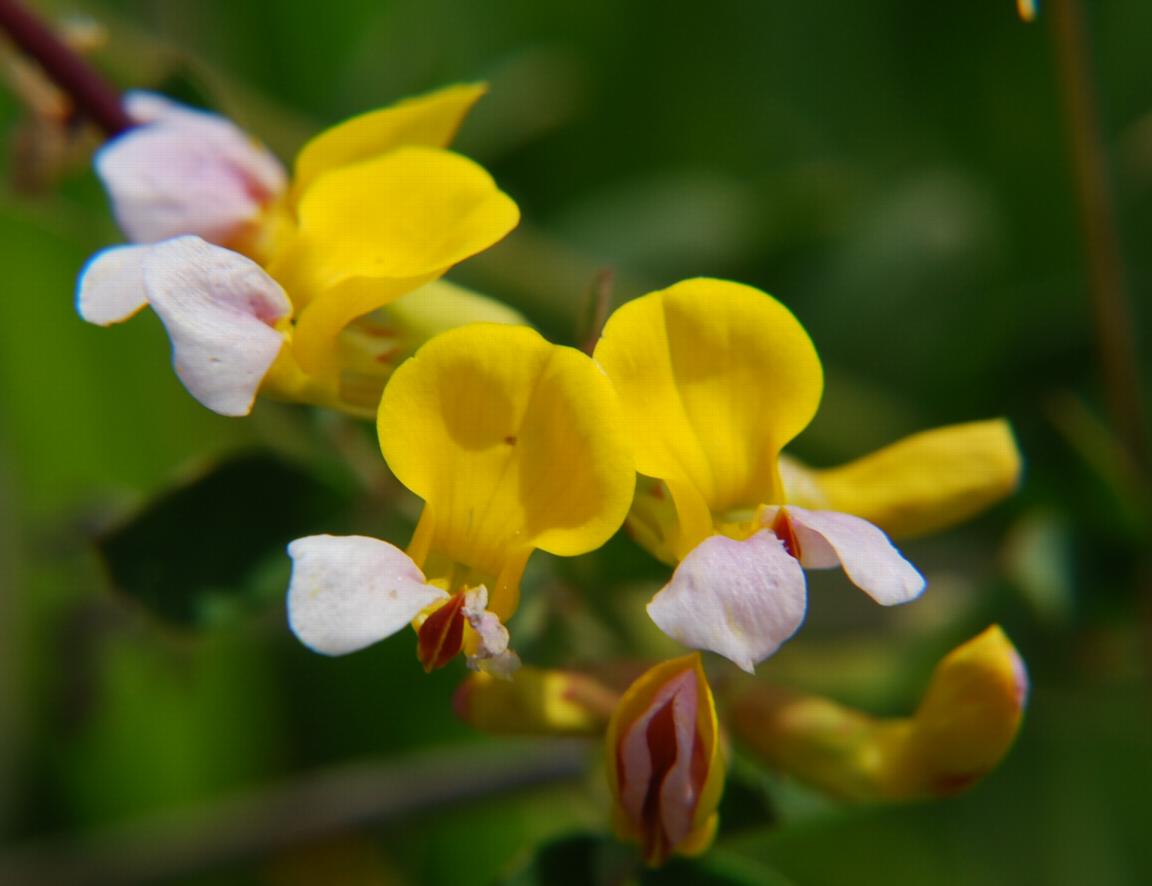
Brackman Island Phenology 1999

Paul Linton who was the Ecological reserve warden for Brackman Island has done a great job in producing a phenology, or  time of  blooming of the plants on Brackman Island. This is also an excellent species list as well. This was also done for  1995 Phenology see PDF Brackman Island Phenology_1999

PREDATION ON RHINOCEROS AUKLET EGGS BY A NATIVE POPULATION OF PEROMYSCUS’

LOUISE K. BLIGHT AND JOHN L. RYDER Department of Biological Sciences, Simon Fraser University, Burnaby, BC VjA I%, Canada, e-mail: lkbZight@sfu.ca   The Cooper Ornithological Society, 1999 DOUGLAS E BERTRAM Department of Biological Sciences, Simon Fraser University, Burnaby, BC V5A lS6, and Canadian Wildlife Service, PaciJc Wildlife Research Centre, RR1 5421 Robertson Road, Delta, BC

Grazing of the copepod Diaptomus connexus on purple sulphur bacteria in a meromictic salt lake.

From:www.ncbi.nlm.nih.gov/pubmed/11207740 Environ Microbiol. 1999 Jun;1(3):213-21. Grazing of the copepod Diaptomus connexus on purple sulphur bacteria in a meromictic salt lake. Overmann J, Hall KJ, Northcote TG, Beatty JT. Source Department of Microbiology and Immunology, University of British Columbia, Vancouver, Canada. j.overmann@palmikro.icbm.uni-oldenburg.de Abstract A meromictic lake ecosystem (Mahoney Lake, BC, Canada) was investigated to elucidate the

Brackendale Eagles Provincial Park Background Document BC Parks.. 1999

Introduction: This report has been prepared to provide natural, cultural, and recreational information to assist the management planning process for Brackendale Eagle Provincial Park. Brackendale Eagles Provincial Park is located on the west side of the Squamish River, near the community of Brackendale, B.C., approximately 70 km. north of Vancouver (Figure 1). It is 755

Brackendale Eagles Provincial Park, Background Document: Map—1999

This report has been prepared to provide natural, cultural, and recreational information to assist the management planning process for Brackendale Eagle Provincial Park. Brackendale Eagles Provincial Park is located on the west side of the Squamish River, near the community of Brackendale, B.C., approximately 70 km. north of Vancouver (Figure 1). It is 755 hectares

CDC Field Survey, 1999, A Ceska and J.Pojar Species List.

On April 23 1999 population counts for Sanicula arctipoides , site notes and position of polygons were noted. In addition Sagina decumbens spp.occidentalis was also observed. Survey by Adolf Ceska and Jim Pojar, 1999 complete list in PDF: ceska_pojar_1981_trial_island_er_proposal_plant_list