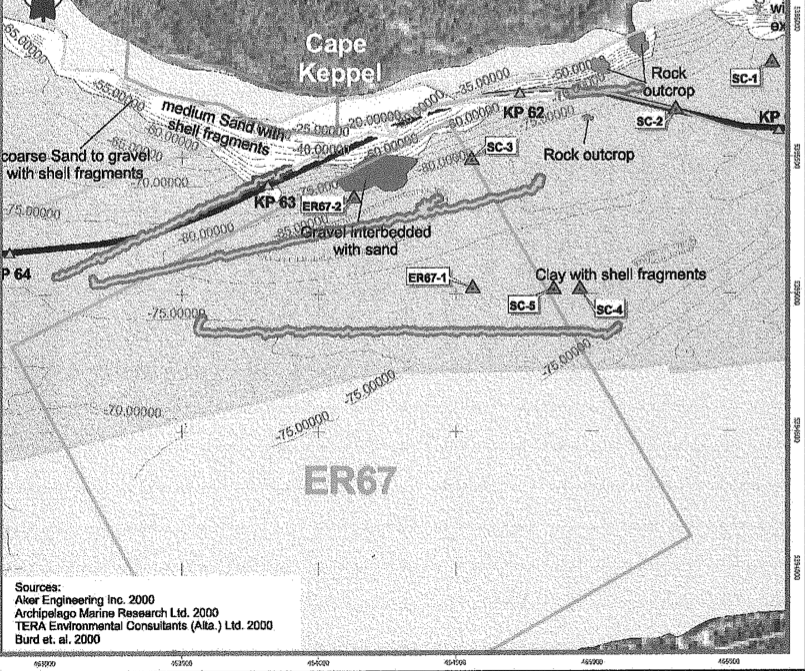
Environmental Assessment of the Ecological Significance of Installing a Natural Gas Pipeline around of through ER 67 (Satellite Channel)

This report by terra Environmental Consultants is an Environmental Impact study of the siting of a proposed Gas Pipeline that could have gone  through the ecological reserve. See the full PDF: Sattelite Channel ER Tera Environmental Consultants 2000 EIA

Shade Preference in Sub-tidal populations of Dorid Nudibranchs: an Analytical Rebuttal

PURPOSE: The purpose of this investigation was to evaluate the claims of H.L. Geiger and A.R. Holyoak (1996) that adult dorid nudibranchs displayed a distinct shade preference during laboratory test runs, and then to analyse their conclusions. Ryan M. J. Murphy, November, 2000 A Submission for partial fulfillment of the requirements of the International Baccalaureate    

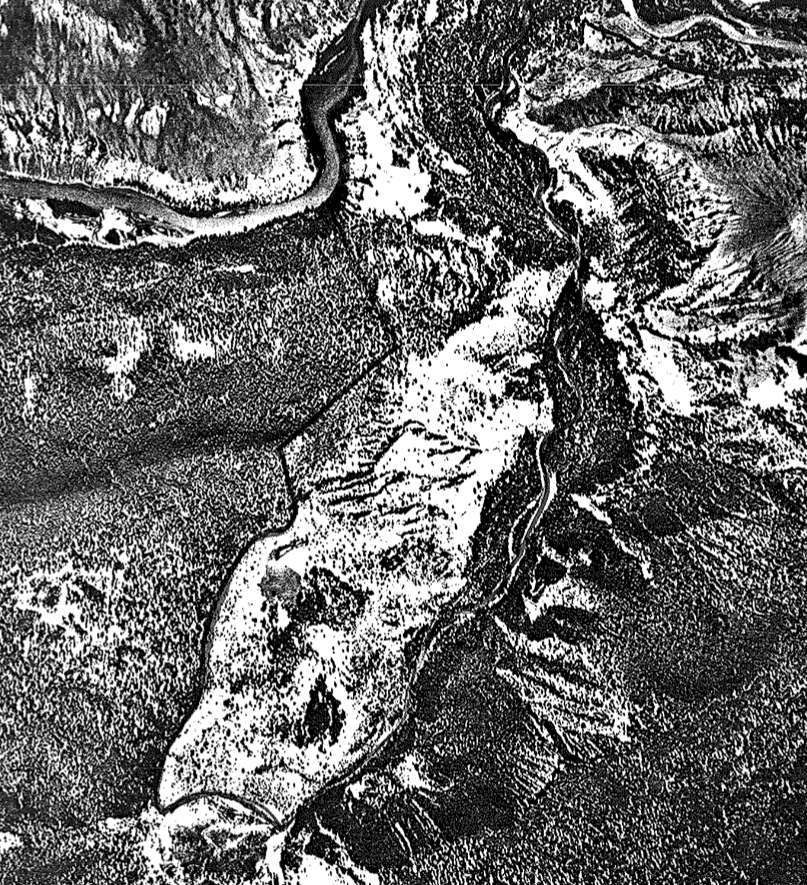
Treeline Dynamics on Southern Vancouver Island, British Columbia

PDF file: laroque Colin P. Laroque, David H. Lewis and Dan J. Smith* Department of Geography—Ring Laboratory University of Victoria Victoria, BC V8W 3P5 This paper describes the nature of treeline dynamics and upper-elevation tree establishment patterns on southern Vancouver Island, British Columbia. We examined tree growth, climate and seedling relationships at three upper-elevation locations

Survival rates of Cassin’s and Rhinoceros Auklets at Triangle Island, British Columbia.

Bertram, D. F., I. L. Jones, E. C. Cooch, H. A. Knechtel, and F. Cooke. 2000. Abstract: We estimated survival of Cassin’s Auklet (Ptychoramphus aleuticus) and Rhinoceros Auklet (Cerorhinca monocerata) from recapture rates during 1994-1997. For both species, a two “age”-class model provided the best fit. Estimates of local adult survival were significantly lower for

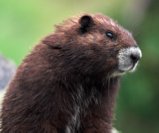
Why are Vancouver Island Marmots at risk?

From: http://victoria.tc.ca/environment/biodiversity/F.W/endangered/marmot.html Wildlife At Risk in British Columbia A brochure series which will eventually include brochures on other Red and Blue listed species, including fish, invertebrates and plants, and on ecosystems. Produced by the Ministry of Environment, Lands and Parks, Wildlife Branch, 780 Blanshard St. Victoria, BC V8V 1X4. For copies of this brochure, write

Byers/Conroy/Harvey/Sinnett Islands Ecological Reserve Purpose Statement

Purpose Statement Primary Role: The primary role of Byers/Conroy/Harvey/Sinnett Islands Ecological Reserve is to protect terrestrial and marine habitats and prevent the disturbance of nesting seabirds and raptors: The only know occurrence of peregrine falcons nesting in trees. Only significant breeding site of tufted puffins along the mainland coast. Seal pupping areas. Extensive kelp reefs

Egg neglect and its implications for egg predation in the Rhinoceros Auklet (Cerorhinca monocerata).

Blight, L.K. 2000. Egg neglect and its implications for egg predation in the Rhinoceros Auklet  (Cerorhinca monocerata). MSc, Centre for Wildlife Ecology, Department of Biological  Sciences, Simon Fraser University, Burnaby, BC. 103 pp. Depredation of island-nesting seabirds by introduced vertebrates is a conservation problem world  wide, particularly as marine birds have generally evolved in the

Predation on seabird eggs by Keen’s mice (Peromyscus keeni): using stable isotopes to decipher the diet of a terrestrial omnivore on a remote offshore island

M.C. Drever, L.K. Blight, K.A. Hobson, and D.F. Bertram Abstract: We used stable isotope techniques to analyze tissues of Keen’s mice (Peromyscus keeni) and Townsend’s voles (Microtus townsendii cowani) and a subset of prey items at Triangle Island, British Columbia, western Canada’s largest seabird colony. Isotope analysis allowed us to investigate the importance of seabird

Columbia Lake Ecological Reserve Overview, Biological and Physical

ORIGINAL PURPOSE Protection of calcicolous vegetation, hydrology and geology as well as ecosystems representative of the Interior Douglas-fir zone Physical: The reserve lies mostly on the west-facing slope of a north-south trending ridge, about 300 m east of Columbia Lake and 150 m higher in elevation. Slope exposure is mostly to the west and southwest

Clayoquot Region Research and Document Database – Part 1a

350    Exploring the Dynamics of an Old Growth Forest at Clayoquot Sound    Gray C.    Clayoquot Biosphere Project         student paper         1995         Clayoquot River valley; natural history; ecology 351    Extended Plant List for the Clayoquot Valley    Kunze U.    Clayoquot Biosphere Project         report         1996         Clayoquot River Valley; botany 352    External Threats to National Parks: A Case Study of