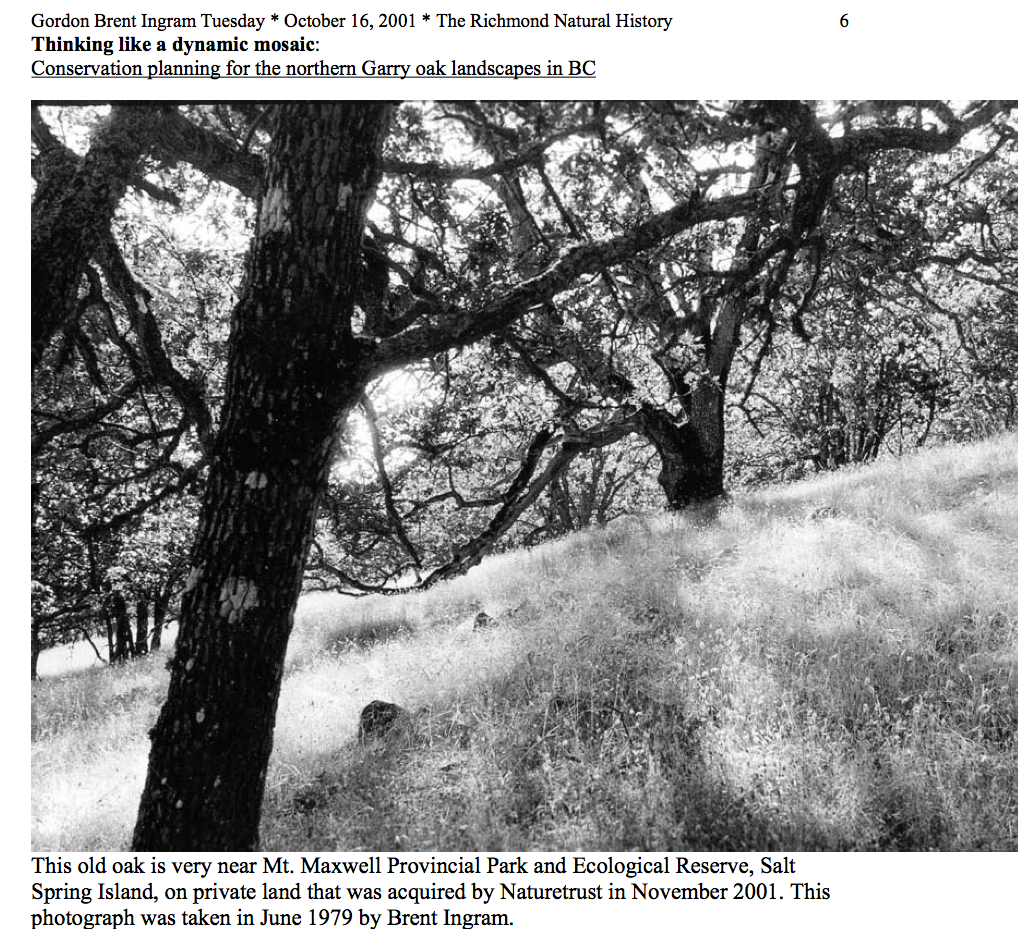
Thinking like a dynamic mosaic: Towards a strategy for conserving northern Garry oak ecosystems * part 1

from Menziesia: Newsletter of the NPSBC Native Plant Society of British Columbia 7 (1): 8 – 11. Thinking like a dynamic mosaic: Towards a strategy for conserving northern Garry oak ecosystems * part 1 Gordon Brent Ingram Tuesday * October 16, 2001 * The Richmond Natural History 4 Thinking like a dynamic mosaic: Conservation planning

Nestling Growth and Parental Provisioning of Tufted Puffins

Gjerdrum, C. 2001. Nestling growth and parental provisioning of Tufted Puffins (Fratercula cirrhala) on Triangle Island, British Columbia. MSc, Simon Fraser University, Burnaby, BC. 117 pp. Masters of Science Thesis Abstract I studied the reproductive performance of tufted puffins (Fratercula cirrhata) on Triangle Island, British Columbia during two years when reproduction was successful. Complete reproductive

Race Rocks Sustainable Energy System Development

Taco Niet and Dr. Ged McLean  of the Institute for Integrated Energy Systems, University of Victoria presents a renewable energy plan for Race Rocks. This paper was presented at the 11th Canadian Hydrogen conference, June 17, 2001 in Victoria. See the PDF: tacopaper Abstract: Race Rocks is a small archipelago located just Southwest of Victoria,

Re-Identification of Terrestrial Slugs From Seabird Nesting Burrows off the West Coast of Vancouver Island

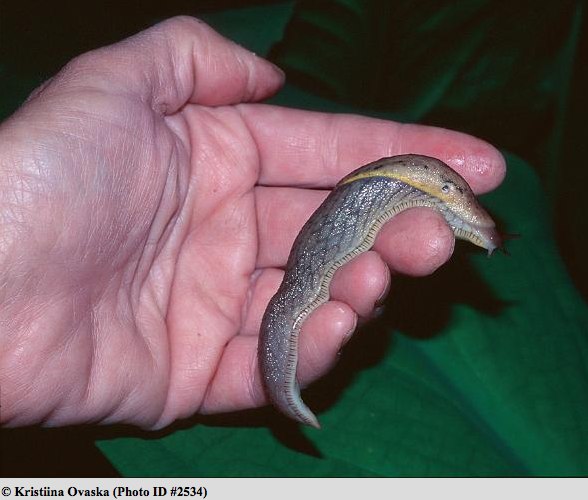
Kristiina Ovaska has consented to use pictures of one of the slugs referred to in this research paper, Prophysaon foliolatum as being the first record for BC. I have included several pictures here because of the pronounced colour variation of this species. This set of images is from the E-Fauna Photo Gallery: See this reference

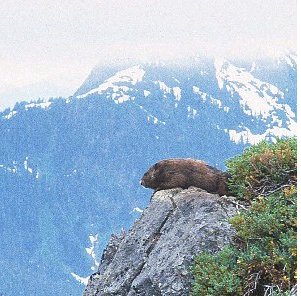
Notes on the Vancouver Island marmot (Marmota vancouverensis)

http://www.marmots.org/notes_vim.html Andrew A. Bryant Chief Scientist, Marmot Recovery Foundation updated: January 21, 2001 Purpose The purpose of this paper is to serve as a “road-map” to the primary scientific literature concerning Vancouver Island Marmots (Marmota vancouverensis). Contents: Purpose What’s a Vancouver Island marmot? History Prehistoric distribution Historical distribution Current distribution Population trends Habitat characteristics Reproduction

Shade Preference in Sub-tidal populations of Dorid Nudibranchs: an Analytical Rebuttal

PURPOSE: The purpose of this investigation was to evaluate the claims of H.L. Geiger and A.R. Holyoak (1996) that adult dorid nudibranchs displayed a distinct shade preference during laboratory test runs, and then to analyse their conclusions. Ryan M. J. Murphy, November, 2000 A Submission for partial fulfillment of the requirements of the International Baccalaureate    

Treeline Dynamics on Southern Vancouver Island, British Columbia

PDF file: laroque Colin P. Laroque, David H. Lewis and Dan J. Smith* Department of Geography—Ring Laboratory University of Victoria Victoria, BC V8W 3P5 This paper describes the nature of treeline dynamics and upper-elevation tree establishment patterns on southern Vancouver Island, British Columbia. We examined tree growth, climate and seedling relationships at three upper-elevation locations

Survival rates of Cassin’s and Rhinoceros Auklets at Triangle Island, British Columbia.

Bertram, D. F., I. L. Jones, E. C. Cooch, H. A. Knechtel, and F. Cooke. 2000. Abstract: We estimated survival of Cassin’s Auklet (Ptychoramphus aleuticus) and Rhinoceros Auklet (Cerorhinca monocerata) from recapture rates during 1994-1997. For both species, a two “age”-class model provided the best fit. Estimates of local adult survival were significantly lower for

Egg neglect and its implications for egg predation in the Rhinoceros Auklet (Cerorhinca monocerata).

Blight, L.K. 2000. Egg neglect and its implications for egg predation in the Rhinoceros Auklet  (Cerorhinca monocerata). MSc, Centre for Wildlife Ecology, Department of Biological  Sciences, Simon Fraser University, Burnaby, BC. 103 pp. Depredation of island-nesting seabirds by introduced vertebrates is a conservation problem world  wide, particularly as marine birds have generally evolved in the

Predation on seabird eggs by Keen’s mice (Peromyscus keeni): using stable isotopes to decipher the diet of a terrestrial omnivore on a remote offshore island

M.C. Drever, L.K. Blight, K.A. Hobson, and D.F. Bertram Abstract: We used stable isotope techniques to analyze tissues of Keen’s mice (Peromyscus keeni) and Townsend’s voles (Microtus townsendii cowani) and a subset of prey items at Triangle Island, British Columbia, western Canada’s largest seabird colony. Isotope analysis allowed us to investigate the importance of seabird

Clayoquot Region Research and Document Database – Part 1a

350    Exploring the Dynamics of an Old Growth Forest at Clayoquot Sound    Gray C.    Clayoquot Biosphere Project         student paper         1995         Clayoquot River valley; natural history; ecology 351    Extended Plant List for the Clayoquot Valley    Kunze U.    Clayoquot Biosphere Project         report         1996         Clayoquot River Valley; botany 352    External Threats to National Parks: A Case Study of

Clayoquot Region Research and Document Database– Part 2

500 Kennedy and Muriel Watershed Restoration Program Hyatt Kim Dept. of Fisheries and Oceans, Pacific Biological Station project watershed; kennedy river; muriel river; salmon habitat restoration 501 Kennedy Lake Sockeye Test Fishing Program Lane Jim Nuu-Chah-Nulth Tribal Council summary: project involves seine test fishing and hydro-acoustic traverses in the Fortune Channel and Tofino Inlet areas

Clayoquot Region Research and Document Database — Part 3

900    Stream-Fish Habitat Condition Assessments David Creek, Muriel Ridge, Clayoquot Sound:  Kennedy-Muriel WRP (FINAL)    NEI; MC Wright & Assoc.    BC Environment Lands and Parks (Ministry of) Regional Office, Nanaimo         report         March 25, 1996 901    Stream-Fish Habitat Condition Assessments David Creek, Muriel Ridge, Clayoquot Sound:  Kennedy-Muriel WRP (FINAL)    NEI; MC Wright & Assoc.    WRP Library         report        

Clayoquot Region Research and Document Database – Part 4

1001    The rare plants of the Queen Charlotte Islands    Ogilvie R. and H.L. Roemer    BC Naturalist    general    magazine article    BC Naturalist May 1984 (Summer):17-18    1984    600 species and subspecies of plants known from Queen Charlotte Islands; the rarest are 1 1 plant species and subspecies some of which are found on west coast of Vancouver